Welsh Gold Bracelets at Clogau Outlet: Weight, Fit and Construction
8 min read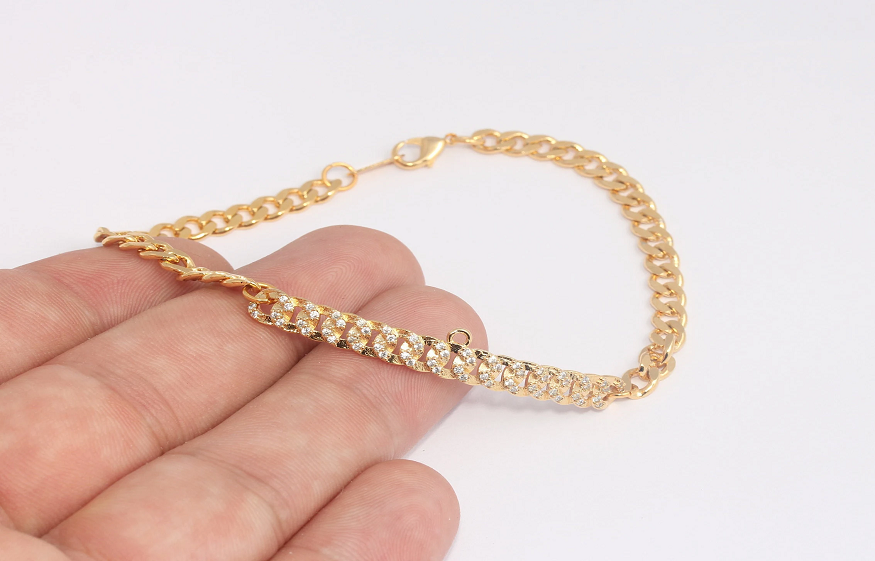
Of all the jewellery a person owns, a bracelet is the piece that has to survive contact with actual life. It knocks against desks and steering wheels, goes in and out of coat sleeves, and sits in the wearer’s own eyeline all day in a way a necklace never does. A Clogau Outlet bracelet has the same job to do as any other, and a bracelet badly balanced, badly sized or badly fastened comes off within a fortnight and stays off.
What Clogau Outlet stocks is discontinued, past-season and end-of-line Clogau jewellery: the same rare Welsh gold, construction and hand-finishing at a reduced price. That matters more here than in most categories, because bracelets are the one thing people want several of, and buying several at full price is an expensive habit.
What follows is the physical side of choosing one. How much a bracelet should weigh, how to measure a wrist so the number is right first time, what allowance to add for a bangle as opposed to a chain, which clasps stand up to daily wear, and how to stack two or three pieces so they sit together instead of fighting each other.
Why Heft Is the First Thing to Judge
Pick up two bracelets of identical design and different weight and you will know within a second which one you would rather own. Weight is the most immediate signal of how a piece has been made, because mass in a bracelet comes from solid links, thick-walled tubing and properly filled settings rather than from thin metal shaped to look substantial.
There is a floor and a ceiling to this. Too light and a chain bracelet slides, twists so the clasp ends up on top of the wrist, and feels insubstantial. Too heavy and it drags, catches on cuffs and gets noticed all day for the wrong reason. The bracelets across the Welsh gold bracelet range sit deliberately in the middle of that band, which is why they tend to be described as weighty rather than heavy.
Balance: Where the Weight Actually Sits
Total weight is only half of it. Distribution decides comfort. A bracelet with a heavy central feature and a light chain will rotate until the feature hangs underneath the wrist, which is why so many pendant-style bracelets end up worn upside down. A design that spreads its mass evenly along its length, or that pairs a feature with a chain substantial enough to counter it, stays where it was put.
Check the ratio between the decorated section and the plain one before you buy. If the chain looks like an afterthought next to the feature, it will behave like one.
Measuring a Wrist Without Guessing
Wrist measurement is the step people skip, and it is the reason most badly fitting bracelets exist. It takes a minute and needs nothing but a strip of paper and a ruler.
Wrap a strip of paper around the wrist just below the wrist bone, at the point where a bracelet naturally settles, and mark where the paper meets. Lay it flat, measure to the mark in centimetres, and that number is your bare wrist measurement. Do it in the evening rather than first thing, because wrists swell slightly with warmth and activity, and a bracelet sized to a cold morning wrist will feel tight by supper.
Measure both wrists, since most people have a noticeable difference between them, and size to whichever one the bracelet will live on. If you are buying a gift, a watch strap or an existing bracelet borrowed for ten minutes gives you the same information.
What to Add: Bangles Against Chain Bracelets
The allowance you add to a bare wrist measurement depends entirely on which type you are buying. This is where most sizing errors happen, and the two categories pull in opposite directions.
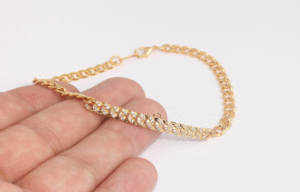
A chain bracelet needs roughly one and a half to two centimetres above the bare measurement. That gap lets the bracelet drape rather than grip, so it moves around the wrist and sits where the wrist is narrowest. Less than that and it behaves like a tight watch strap. Considerably more and it slips over the hand, which is how bracelets get lost.
A solid bangle is a different problem, because it has to pass over the hand rather than fit the wrist. Measure the widest part of the hand with the thumb tucked towards the palm, and use that figure instead. A bangle that fits the wrist perfectly and cannot clear the knuckles is useless. Hinged bangles remove the problem entirely and suit anyone with a broad hand or limited flexibility.
Clasps and Which Ones Survive Daily Wear
A clasp is the only part of a bracelet with a job beyond looking well made. It is where the difference between occasional and everyday wear gets decided, and it is worth more attention than most buyers give it.
Lobster Clasps: The Reliable Default
The lobster clasp, with its spring-loaded gate and thumb lever, is the sensible standard for daily wear. It closes positively, it is hard to open by accident, and you can feel and hear it engage. Its one weakness is that fastening it one-handed is fiddly, which is a real consideration for a bracelet you will be putting on yourself every morning.
Box Clasps and Safety Catches: Security You Can Feel
A box clasp, where a tongue clicks into a housing, sits flush and disappears into the design in a way a lobster clasp cannot. On a heavier bracelet it is worth looking for a box clasp with an additional safety catch, a small hinged figure-of-eight or clip that folds over the join. On a piece carrying rare Welsh gold, that second point of security is not fussiness. It is the difference between a bracelet that comes home and one that does not.
Toggle clasps, where a bar passes through a ring, are the most elegant and the least secure, relying on the weight of the bracelet to hold the bar in place. They suit an evening rather than a working week.
Hand-Finishing and What Polish Tells You
Finishing is the last five per cent of the work and the part that separates jewellery from metalwork. Run a fingertip along the inside surface, the face that will sit against skin for years. It should be as smooth as the outside, because manufacturers cutting corners polish only what shows.
Look at the link joins next. Each should be closed cleanly, with no visible gap and no proud edge of solder. Then tilt the piece and watch the light travel across it. A properly polished surface moves light in a continuous sweep; an under-polished one breaks it into patches. That quality photographs poorly and wears beautifully, and a discontinued design carries it just as much as a current one.
The metal itself contributes here. Whether you are looking at the silver jewellery selection or the warmer tones in the outlet’s gold jewellery, the rare Welsh gold worked into each design carries a slightly softer warmth than standard gold, and good polishing is what brings that out rather than flattening it.
Stacking Bracelets So They Sit Rather Than Tangle
Stacking looks effortless and is not. Three bracelets thrown on together knot, click and ride up the forearm. Three chosen with thought settle into a group and stay there.
Vary the widths and keep the diameters close. Three bracelets of the same width read as one thick band, whilst a slim chain, a medium chain and a wider bangle create depth. Consistent sizing stops one piece riding two inches higher than the rest. Put the rigid piece nearest the hand, where it acts as a stop for the flexible ones behind it.
Mind the clasps. Two lobster clasps facing each other will catch, so rotate them to different positions around the wrist as you put the stack on. A charm bracelet built from the outlet’s Welsh gold charms works best as the outermost piece, where its charms hang freely rather than snagging on the chain beside it.
Restrict the stack to one metal tone. Mixed metals need a deliberate repeating pattern to look intentional, and two of one tone with one of another reads as an accident.
Why Outlet Prices Make a Stack Realistic
Stacking is a lovely idea that founders on arithmetic. Three full-price bracelets is a significant purchase, and most people buy one, wear it alone, and never get to the stack at all.
Discounts across Clogau Outlet commonly run between 30 and 50 per cent off RRP, which changes the calculation completely. The budget for one bracelet becomes the budget for two, or for a bracelet and the beginnings of a charm collection. Because outlet stock rotates, building a stack over several months from the reduced pieces in the sale also leaves you with designs no longer in production, which is a more interesting outcome than three pieces bought off one page.
Buy the anchor piece first, live with it, and add. Looking across the wider jewellery collection whilst you decide will show you which widths sit comfortably alongside what you already own.
Looking After a Bracelet That Gets Worn Every Day
Care is mostly about what you take a bracelet off for. Remove it before washing up, swimming, applying hand cream and gardening, since chlorine, salt water and cleaning products are harder on precious metal and stones than years of ordinary wear.
Cleaning needs nothing exotic. Warm water, a drop of washing-up liquid and a soft baby toothbrush will lift the film that builds up in link joins, followed by a rinse and a dry with a soft cloth. Finish with a proper jewellery polishing cloth rather than a paper towel, which is more abrasive than it feels.
Storage matters more than most people think. Keep bracelets flat and separate in individual soft pouches, because the fastest way to scratch a polished surface is to let two pieces share a box. Once a year, check the clasp spring and the jump rings at either end of the chain. A clasp that has gone soft is a cheap repair and an expensive loss.
Conclusion: Fit Decides Everything Else
Design gets people to buy a bracelet. Weight, fit and construction decide whether they still wear it in five years. A piece that sits properly on the wrist, fastens with a clasp you trust and carries enough mass to feel like something becomes automatic, put on without thinking each morning and noticed only when it is missing.
None of those qualities requires expertise to judge, and every one of them can be checked before you spend anything. That is unusual in jewellery, where so much of the buying is done on appearance alone and the disappointment arrives weeks later.
Clogau Outlet is a good place to practise that judgement, because reduced prices lower the cost of a decision without lowering the standard of the jewellery. The Welsh gold in a discontinued bracelet came from the same finite source as the Welsh gold in a current one, and there is a quiet satisfaction in wearing a design nobody is making any more.